The Web of Support Helping More Students Graduate
Apr 21, 2026Education Success
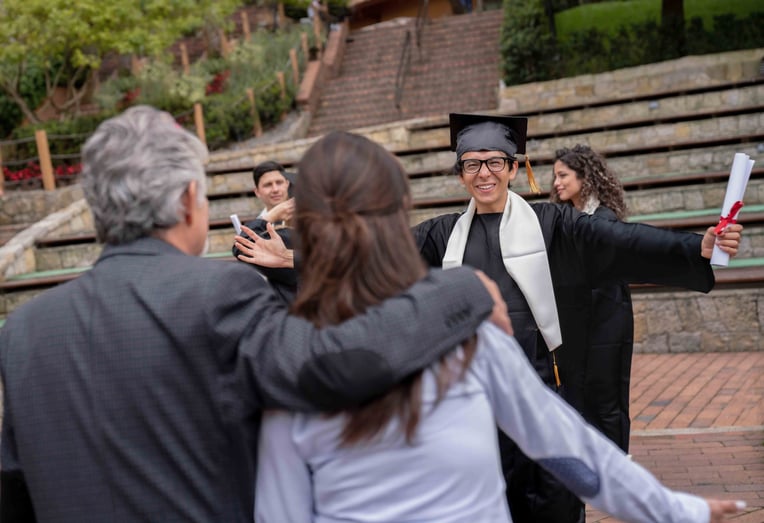
When Des Moines Public Schools recently reported that its graduation rate rose from roughly 71% to more than 76% for the Class of 2025, it was encouraging news for our entire community.
It’s also a reminder of something we don’t always see in the headline: graduation rates don’t rise because of a single program, a single school, or a single year of effort. They rise because of a sustained, coordinated commitment—inside classrooms and far beyond them.
At United Way of Central Iowa, we see that commitment every day. And we see the “invisible web” of support that helps students stay engaged, overcome barriers, and ultimately cross the finish line.
The Work Behind the Numbers
DMPS has pointed to three key drivers behind the increase: expanded student support, intervention and credit recovery programs, and reduced chronic absenteeism. Each of these reflects years of focused work across schools.
But none of them happen in isolation.
Expanded student support often starts with basic needs such as stable housing, consistent meals, access to mental health care. Intervention and credit recovery depend on trusted relationships and flexible pathways. Attendance improves when families have the resources and support to get students to school every day.
And importantly, attendance is more than a metric—it’s an early indicator. When students attend school consistently, they are far more likely to stay on track academically and ultimately graduate. Improvements in graduation rates often begin with improvements in attendance long before a student reaches their senior year.
These are school priorities. They are also community responsibilities.
The Invisible Web of Support
Across central Iowa, a network of partners works alongside schools to address the barriers that can stand between a student and graduation.
After the school day ends, organizations like Boys & Girls Clubs of Central Iowa, YMCA of Greater Des Moines, and Camp Fire Heart of Iowa provide safe, structured environments where students can build skills, receive academic support, and stay connected. Research consistently shows that students who participate in out-of-school programs multiple days per week are more likely to attend school regularly and graduate on time—reinforcing why these investments matter.
For students who need additional guidance and encouragement, mentorship programs like Big Brothers Big Sisters of Central Iowa and initiatives like ICOACH and ManUp Iowa help young people build confidence, set goals, and stay on track.
When students fall behind, programs like Iowa Jobs for America's Graduates (iJAG), By Degrees, and school-based efforts such as Options Academy create alternative pathways to keep them moving toward graduation.
And for many students, the barriers are more fundamental. Community-based organizations like Children & Family Urban Movement (CFUM), Willkie House, Oakridge Neighborhood, and Youth Law Center work with families to address challenges related to housing, food access, legal needs, and overall stability—so students can show up ready to learn.
Culturally specific and identity-affirming programs including Al Éxito, AYDE, Jewels Academy, and Isiserettes Drill & Drum Corps create a sense of belonging that is essential to engagement and persistence.
Career-connected learning opportunities through partners like Iowa State University Science Bound, PI515, and Project Iowa help students see a future for themselves—and a reason to stay in school. Because success is not only about earning a diploma, but graduating with a plan for what comes next, whether that’s employment, education, or training.
And in neighborhoods across our community, organizations like Forest Avenue Outreach, Mothers Against Violence, and Sarge's WestSide Boxing Club are helping create safe, supportive environments where young people can thrive.
A System That Works Together
What connects all of these efforts is coordination.
Through the Community School model and the work of school-based coordinators within Des Moines Public Schools, students and families are connected to the right supports at the right time. Instead of navigating systems alone, they have a network working alongside them.
Behind the scenes, partners and schools are also working from shared insights. Through active data engagement, schools and community organizations can better understand attendance patterns, academic progress, and where students may need additional support—allowing for earlier, more targeted intervention.
That coordination is where community investment matters most.
United Way of Central Iowa works to bring partners together, align resources, and invest in programs that address the full picture, because we know that education success is deeply connected to essential needs, health and well-being, and economic opportunity.
Progress and the Work Ahead
A five-point increase in graduation rates represents real progress. It reflects years of effort by educators, students, families, and community partners who have stayed focused on what matters most.
It also reminds us that this work is ongoing.
Many students in our community are still navigating significant challenges, from housing instability to financial hardship to mental health needs. For families living paycheck to paycheck, even small disruptions can have a big impact on a student’s ability to stay engaged in school.
That’s why continued investment and collaboration are so important.
What It Takes to Graduate
Graduation is often seen as a milestone achieved in a single moment. In reality, it’s the result of thousands of moments: a mentor showing up, a meal provided, a safe place after school, a second chance to earn a credit, a teacher or coordinator making a connection.
It’s the result of a system working—together.
We’re proud to stand alongside Des Moines Public Schools and our many partners as part of that system. And we’re encouraged to see the impact of that collective effort beginning to show in outcomes like graduation rates.
Because when a community comes together to support its students, more of them reach the finish line—and more of them are prepared for what comes next.
CTA Headline Goes Here Lorem Ipsum Dolor Sit Amet
Lorem ipsum dolor sit amet consectetur. Quis congue varius a.